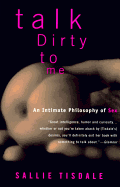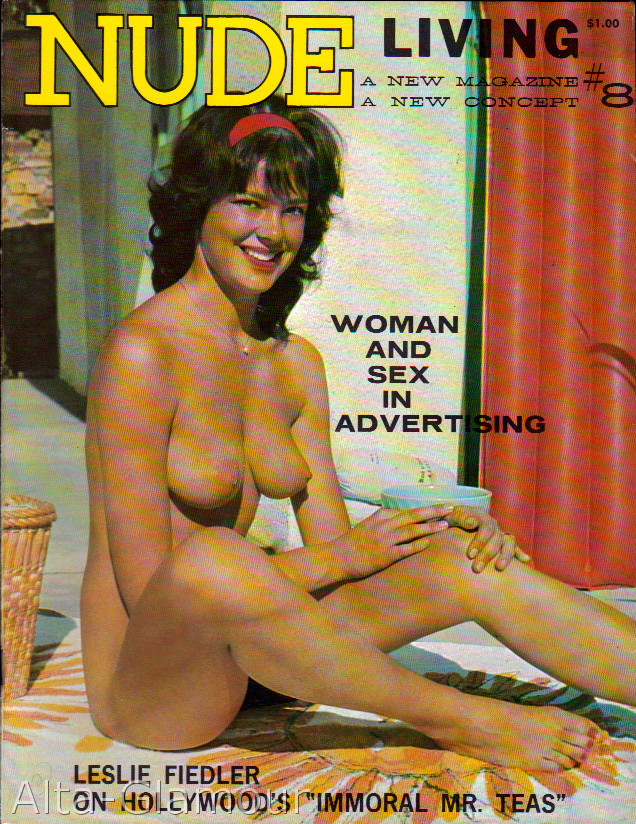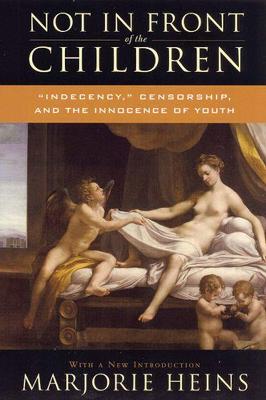

BOOK DESCRIPTION
In this hip, funny, and bestselling distillation of a lifetime of research, the country's leading maverick sexpert offers her daring, delightful, and bound-to-be-controversial perspective on sexuality, hang-ups, feminism, family values, and the general state of sex in American culture today.
______
Susie Bright. The Sexual State of the Union. New York, NY: Touchstone Books/Simon & Schuster, 1998. 251pp.
BOOK DESCRIPTION
Wonderful sex does more than melt both body and soul; it brings power, energy, and deep satisfaction to all aspects of our lives.
Ωράριο λειτουργίας με προσυμφωνημένη συνάντηση:
Δευτέρα, Τετάρτη και Παρασκευή, 18.00 - 21.00
Φιλομήλας 6, Εκάλη Αττικής
Τηλ. επικοινωνίας: 6971933414
Υποχρεωτική η χρήση μάσκας προσώπου
Η λήψη έγινε με HP Photosmart 14537 megapixels 6.00
______
Joyce Peterson & Marilyn Mercer. Adultery for Adults: A Unique Guide to Self-Development. New York: Bantam Books, Inc., 1970. 176pp, 19 black-and white line drawings
BOOK DESCRIPTION
This volume describes how the initiation of young girls into the sexual practices of the commune became a major source of conflict. The study appraises information about the history, practices, organization, and principles of Oneida.
Maren Lockwood Carden. Oneida: Utopian Community to Modern Corporation. New York, N.Y.: Harper Torchbooks/Harper & Row, Publishers, 1971. xx+227 pp., 23 black-and-white illus.
BOOK DESCRIPTION
In 1986, a small mail-order company was invaded by thirty-seven armed law enforcement agents who instantly shut down all operations, herded the employees into a warehouse, and systematically interrogated everyone, allowing them to leave only after subpoenas were distributed.
BOOK DESCRIPTION
Nearly two thousand communes now flourish, their members presumably seeking to escape from the traditional life style of the nuclear family. A similar path was traveled a century ago by utopian idealists who also chose to separate themselves from society to achieve an ideal. Like modern communes, those of the nineteenth century varied in their purposes, ideals, and sexual arrangements. Mr. Muncy concentrates on those that were original or unique in their approach to sex and marriage.
Three basically different types of utopian community were founded in America during the nineteenth century: (1) the sectarian communities inspired by a common desire for the good life on earth, but particularly for eternal life; (2) the reform communities, which attempted to lead the world to a perfect order through the application of reform principles on a small scale, and which trusted others, and eventually the whole world to follow their example; and (3) the purely economic cooperatives, which sought to alleviate the distresses of their members by combining their resources apart from the harsh competition of capitalism.
The majority of the utopian communities – including those founded by Robert Owen, Charles Fourier, and Etienne Cabet –attempted to maintain the separate family unit, sometimes adding a communal dining hall, but found the exclusiveness of the family a problem. Several religious communities where continence was practiced –the Shakers, Rappites, Zoarites, and Jansonists among them–were more successful in maintaining a communal arrangement. The Mormons adopted polygyny, propounding the doctrine of “celestial marriage” to bolster their practice with theology. The Perfectionists at Oneida adopted a system, of complex marriage wherein each was married to all others of the opposite sex in the community. Some communities practiced free love, others made sexual orgies occasions of divine worship.
Generally, Mr. Muncy finds that communities were forced either to modify or abandon the monogamous nuclear family if they were to last for long. A fascinating piece of American social history that is exhaustive, objective, and informative.
______
Raymond Lee Muncy. Sex and Marriage in Utopian Communities: 19th Century America. Bloomington / London: Indiana University Press, 1973. 275pp.